







The Trump administration is signaling a major policy shift on cannabis: considering the reclassification of marijuana from its long-standing Schedule I status to Schedule III under the Controlled Substances Act. If enacted, this move could trigger one of the most transformative moments in U.S. cannabis history, reshaping tax policy, industry growth, and federal-state relations.
For decades, marijuana has been grouped alongside heroin and LSD under Schedule I, reserved for substances with “no accepted medical use.” This classification has hindered research, forced state-legal businesses to operate in a legal gray zone, and imposed crippling tax burdens under IRS Code 280E, which prevents cannabis companies from deducting ordinary business expenses.
Reclassifying marijuana to Schedule III would not legalize it federally, but it would recognize its medical utility, reduce barriers to research, and—critically—eliminate 280E restrictions. Analysts estimate this could save U.S. cannabis operators billions annually in taxes, freeing up cash for reinvestment, job creation, and expansion.
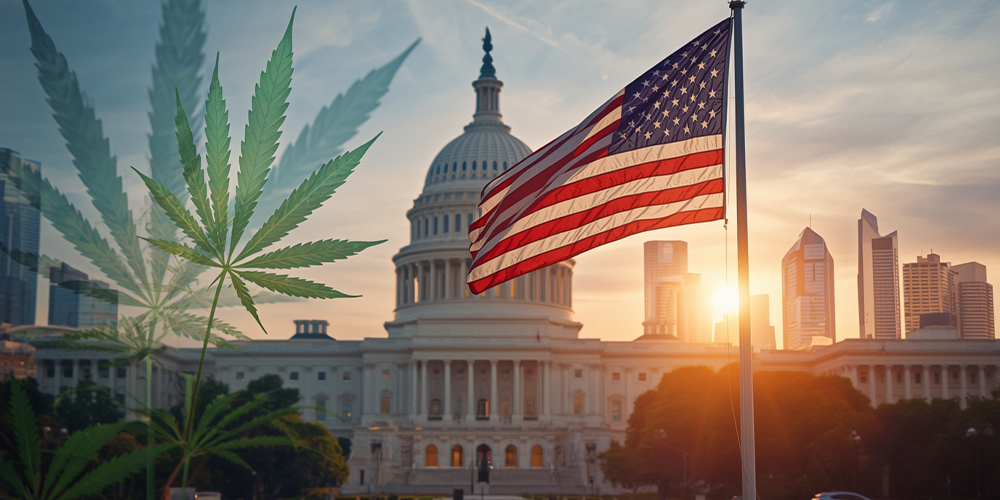
Industry analysts suggest a Schedule III shift could unlock a flood of institutional investment. With businesses suddenly able to operate with standard tax deductions, valuations could surge, paving the way for new mergers, acquisitions, and IPOs in the cannabis sector.
According to Whitney Economics, U.S. cannabis operators paid more than $1.8 billion in excess federal taxes in 2023 due to 280E. Removing this burden could shift entire balance sheets from red to black almost overnight. States with robust cannabis markets like California, Colorado, New York, and Illinois would likely see accelerated growth as companies gain financial breathing room.
The Trump administration’s exploration of cannabis rescheduling reflects shifting voter attitudes. Recent polling shows nearly 70% of Americans support marijuana legalization, with bipartisan consensus stronger than ever. By pursuing reclassification, the administration could appeal to younger voters and business-minded conservatives eager to capture cannabis tax revenue.
Still, reclassification stops short of full legalization, meaning interstate commerce, banking restrictions, and criminal justice reforms remain unresolved. Critics argue that while Schedule III status reduces financial pain for operators, it does little to address systemic inequities in federal cannabis enforcement.
Cannabis industry leaders have responded with cautious optimism. Many view Schedule III as a gateway reform—one that could normalize federal research and spur FDA-approved cannabis-based medications. Investors, meanwhile, see a “green light” for renewed capital inflows into multistate operators (MSOs) that have been cash-strapped in recent years.
Major cannabis stocks jumped on the news, reflecting renewed investor confidence. Analysts predict that if reclassification proceeds, the U.S. cannabis industry could grow from its current $34 billion market size to over $50 billion by 2030.
The path to reclassification remains uncertain. The process requires input from the DEA, FDA, and Congress, each of which has its own bureaucratic hurdles. Yet the momentum is undeniable: what once seemed politically impossible is now a mainstream policy discussion at the highest level of government.
If reclassification occurs, it won’t just reshape the cannabis industry—it could mark the beginning of a long-overdue modernization of U.S. drug policy.








 Bulk Marijuana Seeds offers high-germination rates of marijuana seeds while keeping you assured that you will be getting the exact Marijuana Strain that you ordered! That is 100% Guaranteed!
 Bulk Marijuana Seeds offers high-germination rates of marijuana seeds while keeping you assured that you will be getting the exact Marijuana Strain that you ordered! That is 100% Guaranteed!